 English
 Chinese
 Mongol

Redefining the construction industry with innovative solutions, cuttin-edge technology and sustainable practices
Redefining the construction industry with innovative solutions, cuttin-edge technology and sustainable practices
Profile Bending 2026-11-18
Profile bending has become an essential manufacturing process in modern industry, offering an efficient and versatile way to shape metal profiles into precise curves, arcs, and complex geometries. As manufacturing technologies continue to evolve, the demand for customized metal components with high dimensional accuracy and structural strength is increasing. Profile bending plays a crucial role in meeting these requirements, supporting a wide range of applications across industries such as construction, automotive, aerospace, shipbuilding, and industrial equipment manufacturing.
Understanding Profile Bending
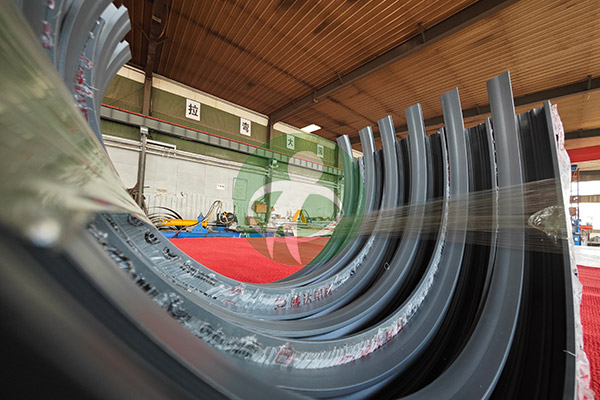
Profile bending is a metal forming process used to transform straight metal sections into curved shapes without significantly changing their cross-sectional geometry. Depending on the material, profile design, and required bending radius, the process can be performed on various types of profiles, including steel beams, aluminum sections, stainless steel tubes, channels, angles, and other structural shapes.
The process typically involves feeding a metal profile through a bending machine equipped with rollers or other forming tools. By applying controlled pressure at specific points, the machine gradually deforms the material into the desired curvature. This gradual forming method helps maintain the structural integrity of the profile while achieving consistent and accurate results.
Compared with traditional fabrication methods that rely heavily on cutting, welding, and assembling multiple components, profile bending can produce smooth, continuous curves with fewer joints. This not only improves the overall appearance of finished products but can also enhance their strength, durability, and manufacturing efficiency.
Technological Innovations in Profile Bending
Modern profile bending technology has advanced significantly in recent years. Improvements in machine design, automation, digital control systems, and material processing have made it possible to achieve more complex shapes with greater precision and repeatability.
One of the most important developments is the introduction of CNC-controlled profile bending machines. Unlike conventional manual or mechanically adjusted equipment, CNC systems allow operators to program bending parameters such as roller positions, bending angles, feed rates, and material compensation. This level of control makes it easier to reproduce complex geometries and maintain consistent quality across large production runs.
Automation is another major trend in the industry. Advanced bending systems can integrate automatic feeding, positioning, measurement, and unloading functions, reducing the need for manual intervention. Automated production not only improves productivity but also minimizes human error and creates a safer working environment.
In addition, modern profile bending machines are increasingly equipped with advanced sensors and monitoring systems. These technologies help manufacturers monitor forming conditions, detect potential deviations, and make adjustments during production. By collecting and analyzing process data, manufacturers can improve operational stability, reduce material waste, and maintain tighter dimensional tolerances.
Simulation software and digital manufacturing tools are also transforming the way profile bending projects are planned. Engineers can evaluate material behavior, estimate springback, identify possible deformation problems, and optimize bending sequences before actual production begins. This reduces trial-and-error operations and helps shorten development cycles, particularly when dealing with complex or customized profiles.
The Importance of Material Selection and Process Control
Material selection plays a significant role in determining the success of profile bending operations. Different metals have different mechanical properties, including yield strength, tensile strength, ductility, and elasticity. These characteristics directly influence the bending force required, the achievable radius, and the likelihood of defects.
Steel is widely used in profile bending because of its strength, availability, and versatility. Stainless steel is often selected for applications requiring corrosion resistance and an attractive surface finish, while aluminum is popular in industries where lightweight structures are important.
However, each material presents specific processing challenges. High-strength steel may require greater bending forces, while aluminum profiles can be more sensitive to cracking or surface damage under certain conditions. Springback, which occurs when a material partially returns to its original shape after the bending force is removed, is another important factor that manufacturers must consider.
To achieve reliable results, manufacturers need to select appropriate tooling, optimize roller configurations, and carefully control bending parameters. Proper process planning helps prevent common defects such as twisting, wrinkling, flattening, excessive deformation, and surface scratches.
Applications of Profile Bending in Modern Industries
The versatility of profile bending makes it valuable across numerous industrial sectors. Its ability to produce customized curved components supports both functional engineering requirements and modern product design.
1. Construction and Architecture
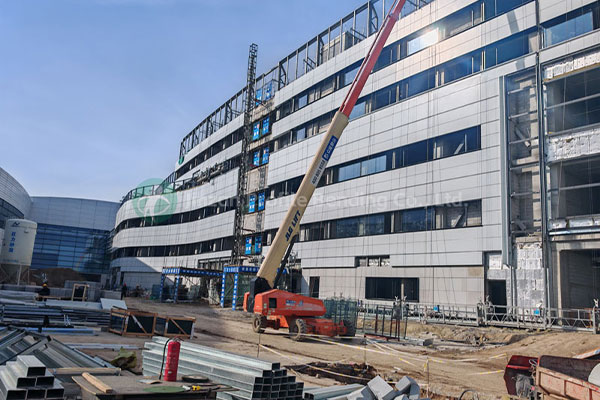
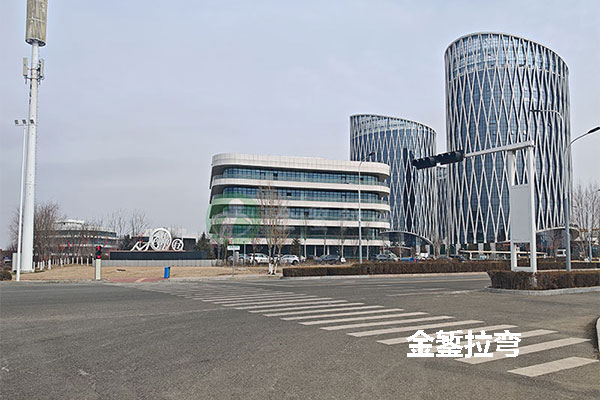
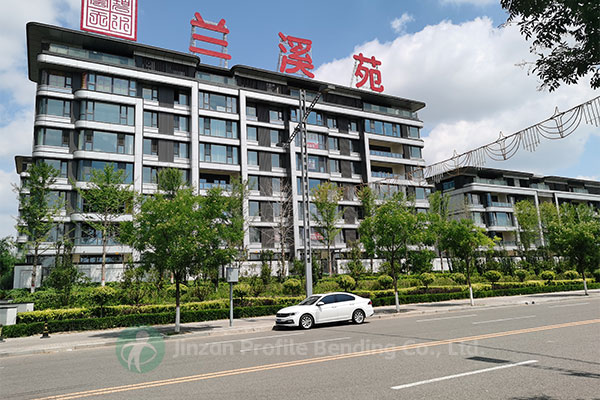
In the construction industry, profile bending is widely used to manufacture curved structural beams, architectural frames, roof structures, curtain wall systems, staircases, and decorative metal elements. Architects and engineers increasingly incorporate curved metal components into contemporary buildings to create distinctive shapes while maintaining structural performance.
Large steel profiles can be bent into customized geometries for stadium roofs, exhibition halls, bridges, and commercial buildings. Aluminum profiles are also commonly used in window systems, facades, and decorative structures because of their lightweight properties and corrosion resistance.
2. Automotive Manufacturing
The automotive industry relies on profile bending to produce various structural and functional components. These include chassis elements, protective frames, roll bars, exhaust system components, seat structures, and reinforcement sections.
As vehicle manufacturers focus on reducing weight while maintaining safety and performance, the demand for accurately formed aluminum and high-strength steel profiles continues to grow. Advanced bending processes help create complex components with fewer connections, potentially reducing assembly time and overall vehicle weight.
3. Aerospace and Aviation
In aerospace manufacturing, precision and material performance are particularly important. Profile bending is used to produce selected curved structural components, support frames, cabin structures, and other specially designed metal sections.
Because aerospace components often involve lightweight materials and strict dimensional requirements, manufacturers must carefully control the bending process to avoid defects that could compromise structural performance. Advanced CNC technology and accurate process simulation help meet these demanding production standards.
4. Shipbuilding and Marine Engineering
Shipbuilding is another important application area for profile bending. Ships and offshore structures contain numerous curved metal components, including hull sections, frames, deck structures, support beams, and specialized reinforcement profiles.
Large-scale bending equipment enables manufacturers to process heavy-duty steel sections required for marine construction. In addition to improving manufacturing efficiency, accurately bent profiles can help reduce the amount of additional cutting, welding, and fitting required during assembly.
5. Industrial Equipment and Machinery
Profile bending is also widely applied in the production of industrial machinery, material handling systems, conveyor structures, agricultural equipment, and storage systems. Curved frames, machine supports, guide rails, and protective structures often require customized profile geometries.
By using profile bending instead of assembling several straight sections, manufacturers can simplify product structures, improve consistency, and reduce the number of welding operations.
Advantages of Modern Profile Bending Technology
Modern profile bending offers several advantages that make it an attractive solution for metal fabrication companies.
First, it provides excellent design flexibility. Manufacturers can produce a wide range of curved shapes and radii to meet specific engineering and architectural requirements. This flexibility is particularly valuable for custom manufacturing and projects involving non-standard profile dimensions.
Second, profile bending can improve structural continuity. Producing a curved component from a single metal profile may reduce the need for multiple welded joints. Depending on the design and application, this can improve structural reliability and reduce potential weak points.
Third, advanced bending technology contributes to higher production efficiency. CNC automation, optimized tooling, and repeatable processing parameters help reduce setup time and minimize unnecessary material handling.
Another important advantage is cost optimization. Although the initial investment in advanced bending equipment can be significant, improved production efficiency, reduced rework, lower material waste, and fewer secondary operations can contribute to long-term savings.
Finally, profile bending supports more sophisticated product designs. It allows manufacturers to create smooth curves and complex shapes that would otherwise require more complicated fabrication processes.
Challenges and Future Development Trends
Despite its many advantages, profile bending still presents several technical challenges. Achieving a small bending radius without damaging the material requires careful process control. Different profile cross-sections may also behave differently during deformation, making it necessary to adjust tooling and bending strategies for each application.
Springback remains one of the most common issues, particularly when processing high-strength materials. Inaccurate compensation can result in dimensional deviations and increased production costs. Manufacturers must therefore combine material knowledge, practical experience, and advanced control systems to achieve the desired geometry.
Looking ahead, the future of profile bending will be closely connected to intelligent manufacturing, automation, and digital integration. Artificial intelligence and machine learning may help manufacturers analyze production data, predict deformation behavior, and optimize bending parameters automatically.
The integration of robotics and smart inspection systems is also expected to improve production consistency. Meanwhile, the growing use of lightweight alloys and advanced high-strength materials will create new opportunities for equipment manufacturers to develop more adaptable and precise bending solutions.
Sustainability will become another important consideration. By improving material utilization, reducing scrap, minimizing energy consumption, and limiting unnecessary welding and machining operations, modern profile bending technology can contribute to more environmentally responsible manufacturing practices.
Profile bending has evolved from a traditional metal forming technique into an advanced manufacturing solution that supports the demands of modern industry. Through the integration of CNC technology, automation, digital simulation, and intelligent process monitoring, manufacturers can now produce complex curved profiles with improved accuracy, efficiency, and consistency.
From architectural structures and automotive components to aerospace applications and heavy industrial equipment, profile bending continues to expand its role in modern engineering and fabrication. As materials, machinery, and digital technologies continue to develop, the process will become even more flexible and efficient.
For manufacturers seeking to improve product quality, optimize production costs, and meet increasingly complex design requirements, investing in modern profile bending technology represents an important step toward more competitive and innovative manufacturing.